
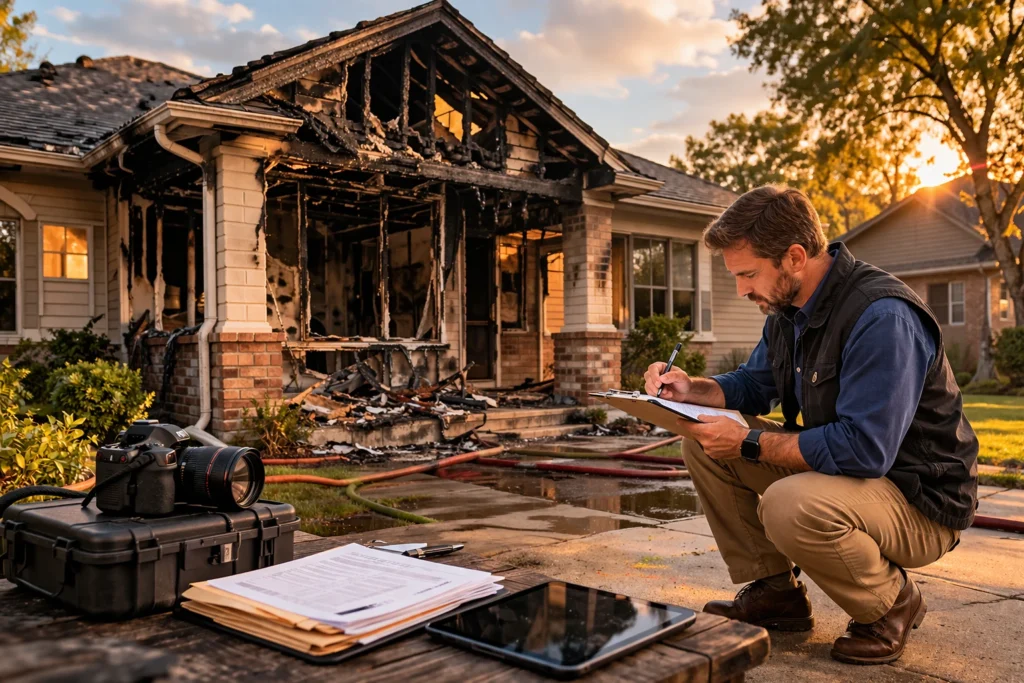
A house fire changes everything in an instant. One moment, life feels normal. The next, you’re dealing with damage, stress, and a long list of unknowns. That’s where a fire insurance adjuster steps in and trust me, their role matters more than most homeowners realize.
After a fire, filing an insurance claim isn’t just paperwork. It’s a negotiation. It’s documentation. It’s knowing exactly what your policy covers and what it doesn’t. And if you’re in Lufkin, understanding how this process works locally can make a real difference in how quickly and how fairly you recover. Let’s break it all down. Clear, simple, and actionable.
What Is a Fire Insurance Adjuster?
A fire insurance adjuster is a professional who evaluates fire damage and helps determine how much compensation should be paid on an insurance claim.
But here’s where it gets interesting. Not all adjusters work for you.
There are three main types:
- Insurance Company Adjuster – Works for the insurance company
- Independent Adjuster – Hired by insurers on a contract basis
- Public Adjuster – Works for you, the policyholder
That last one? That’s the one aligned with your interests. If you’re working with a public adjuster like Lufkin Public Adjuster you’re not going into negotiations alone. You’ve got someone in your corner who understands the fine print and knows how to push for a fair settlement.
What Does a Fire Insurance Adjuster Do?
A skilled fire insurance adjuster doesn’t just walk through your property and write a quick estimate. The job goes much deeper.
Damage Assessment
They inspect everything. Not just what’s burned.
- Structural damage
- Smoke damage
- Water damage from firefighting efforts
- Hidden issues behind walls and ceilings
Fire damage is layered. A good adjuster sees beyond the surface.
Documentation and Evidence Collection
This part is critical.
Your adjuster will gather:
- Photos and videos of damage
- Detailed inventories of lost items
- Repair estimates
- Supporting reports
Without proper documentation, claims get reduced. Or delayed. Or denied.
Policy Review
Insurance policies aren’t light reading.
A fire insurance adjuster breaks down:
- Coverage limits
- Exclusions
- Replacement cost vs. actual cash value
- Additional living expenses (ALE)
They translate complicated policy language into real-world meaning.
Claim Preparation and Filing
This is where precision matters. Your adjuster organizes every detail into a structured claim. Clean. Complete. Hard to dispute.
Negotiation with Insurance Companies
Here’s the truth. Insurance companies aim to control costs.
A fire insurance adjuster negotiates on your behalf to:
- Challenge low estimates
- Justify higher payouts
- Push back on denied items
And yes, this can significantly impact your final settlement.
Why You Should Consider Hiring a Fire Insurance Adjuster
You can handle a claim on your own. Many people try. But most regret it later.
Here’s why hiring a fire insurance adjuster is often the smarter move:
- Less Stress – You focus on recovery, not paperwork
- Better Settlements – Adjusters know what to include and how to value it
- Faster Process – Fewer mistakes mean fewer delays
- Expert Guidance – Especially for complex fire damage
I’ve seen cases where homeowners missed thousands simply because they didn’t know what they could claim. That’s avoidable.
When Should You Call a Fire Insurance Adjuster?
Timing matters. A lot.
You should contact a fire insurance adjuster:
- Immediately after a fire
- Before giving detailed statements to your insurer
- When damage is extensive
- If your claim is delayed or underpaid
Early involvement often leads to better outcomes. Waiting can limit your options.
The Fire Insurance Claim Process Explained
Step 1 – Emergency Response and Safety
- Secure the property
- Prevent further damage
- Keep records of emergency expenses
Step 2 – Initial Insurance Notification
- Report the fire to your insurer
- Get a claim number
- Expect initial contact from their adjuster
Step 3 – Inspection and Evaluation
This is where adjusters both theirs and yours step in.
They’ll assess:
- Scope of damage
- Estimated repair costs
- Loss of personal property
Step 4 – Documentation and Claim Submission
Your fire insurance adjuster compiles:
- Detailed reports
- Inventory lists
- Supporting evidence
Step 5 – Negotiation and Settlement
Expect back-and-forth here. Offers may change. Estimates may be revised. This is where expertise pays off.
Step 6 – Repairs and Recovery
Once settled:
- Funds are released
- Repairs begin
- Life slowly returns to normal
Common Challenges in Fire Insurance Claims
Fire claims aren’t simple. Here are the most common hurdles:
- Hidden Damage – Smoke and soot spread further than visible flames
- Undervalued Losses – Items often priced below replacement cost
- Policy Confusion – Coverage misunderstandings
- Delays – Waiting weeks (or months) for updates
- Emotional Stress – This process isn’t just financial it’s personal
This is exactly where a strong fire insurance adjuster proves their value.
How a Public Fire Insurance Adjuster Protects You
A public fire insurance adjuster works for one person only you. That changes everything.
They:
- Advocate for your maximum payout
- Handle communication with insurers
- Ensure nothing is overlooked
- Keep your claim moving forward
In a place like Lufkin, local knowledge also matters. A local adjuster understands regional construction costs, contractor pricing, and claim trends.
How to Choose the Right Fire Insurance Adjuster in Lufkin
Not all adjusters are equal. Choose carefully.
Here’s what to look for:
- Proper Licensing
- Fire Claim Experience
- Clear Fee Structure
- Strong Reviews
- Local Expertise
Quick Comparison Table
| Factor | What to Look For | Why It Matters |
| Licensing | State-certified adjuster | Ensures legal compliance |
| Experience | Fire-specific claims | Fire damage is complex |
| Fees | Transparent percentage | No surprises later |
| Reputation | Positive client reviews | Proven results |
| Location | Lufkin-based | Local knowledge advantage |
Cost of Hiring a Fire Insurance Adjuster
Most public adjusters work on a contingency basis.
That means:
- No upfront payment
- They earn a percentage of your settlement
Typical range: 5% to 15%
Is it worth it? In many cases, yes. A higher settlement often outweighs the fee.
Fire Damage Tips for Lufkin Homeowners
Right after a fire, emotions run high. But your actions matter.
Do This Immediately:
- Document everything with photos
- Save receipts for expenses
- Secure your property
- Contact a fire insurance adjuster
Avoid These Mistakes:
- Throwing items away too soon
- Accepting the first settlement offer
- Giving recorded statements without preparation
- Underestimating damage
A Quick Note on the Science of Fire Damage
Fire damage isn’t just about flames. It involves chemical reactions, heat transfer, and airborne particles. For example, understanding processes like pyrolysis helps explain why materials continue to break down even after the fire is out. If you want to explore this deeper, here’s a resource. This is exactly why a professional evaluation matters damage isn’t always visible, but it’s often still there.
Conclusion
A fire can take a lot from you. But your insurance claim shouldn’t be another loss. Working with a skilled fire insurance adjuster puts you back in control. It gives you clarity. Confidence. And often, a much better financial outcome.
If you’re in Lufkin, don’t go through this process alone. The right support can make all the difference faster recovery, fair compensation, and fewer surprises along the way. And honestly? That peace of mind is worth everything.
FAQs
A fire insurance adjuster evaluates fire damage and determines how much compensation should be paid on an insurance claim.
While not required, hiring a fire insurance adjuster can help you maximize your claim and reduce stress during the process.
A public adjuster works for you, while an insurance adjuster works for the insurance company and protects their interests.
You should contact one immediately after a fire or before providing detailed statements to your insurance company.
Most public adjusters charge a percentage of your settlement, typically between 5% and 15%, with no upfront fees.
Yes, they often identify overlooked damages and negotiate more effectively, which can lead to a higher settlement.
It can take weeks to several months depending on the complexity of the damage and the negotiation process.
Avoid discarding damaged items, accepting the first offer, or giving recorded statements without proper guidance.
Yes, but that adjuster represents the insurance company, not you, which is why many homeowners hire their own.
In many cases, yes, because they help secure a fair settlement and manage the entire claims process on your behalf.